
Stan Lee’s Soapbox and the Fight Against Racism
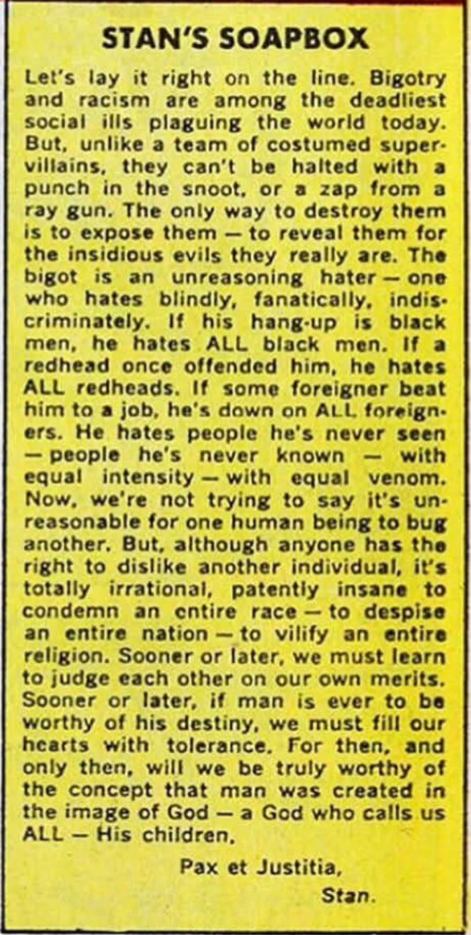
In 1968, in the immediate aftermath of the assassination of Martin Luther King Jr., Stan Lee used his “Stan’s Soapbox” column as a platform for something far more meaningful than comic book commentary. He delivered a direct and deeply personal editorial that condemned racism and bigotry as “deadly social ills,” calling on readers to rise above hatred and treat one another with fairness, empathy, and dignity. At a time when society felt fractured and uncertain, his words stood as a clear moral stance, urging tolerance and shared humanity.
Lee’s commitment to these values extended beyond the page and into the very fabric of the characters he helped bring to life. Through the X-Men, he crafted a powerful metaphor for prejudice and social exclusion, using mutants as a reflection of marginalized communities fighting for acceptance. He also co-created Black Panther, the first mainstream Black superhero, ensuring that readers who had long been underrepresented could finally see themselves as heroes at the center of the story.
At the heart of everything Lee wrote and created was a simple but enduring belief: that choosing goodness over cruelty matters. He consistently championed the idea that doing the right thing, even when it is difficult, is what ultimately defines us, and he used his voice to remind generations of readers that being good to one another is not just idealistic, it is essential.